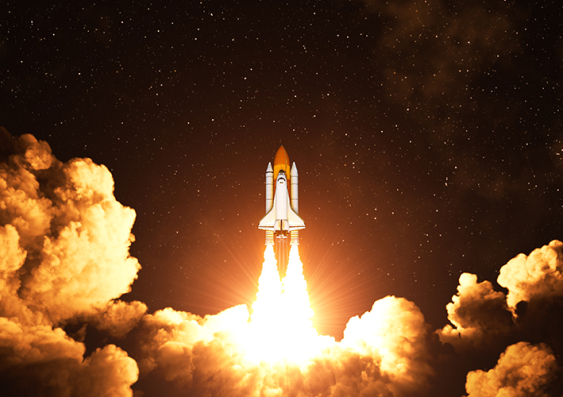
On April 1 2026, NASA is sending astronauts back around the Moon. And Australia will play a critical role in helping them get there.
Four astronauts will launch from Florida, bound for the Moon aboard the Orion spacecraft. Similar to the 1968 spaceflight, the Artemis II mission will orbit the Moon without landing, to test the spacecraft and the systems that support it. It paves the way for the next Artemis missions, with an eventual slated for early 2028.
Today鈥檚 mission will also mark the first time a Black astronaut, a female astronaut and a non-American (a Canadian) will travel to the Moon system.
Throughout the journey, ground stations in Australia will track the spacecraft and maintain communications. This vital support not only underscores Australia鈥檚 space strengths, but also encourages us to consider Australia鈥檚 own direction in space.
A long history of support
Australia鈥檚 support of NASA space exploration has a . A around Australia were essential to US President John F. Kennedy鈥檚 on the Moon by the end of the 1960s.
As part of NASA鈥檚 mammoth human spaceflight efforts, facilities were established around Australia 鈥� in , , and the (ACT).
Indeed, Australia than any other country outside the United States, a contribution memorably celebrated in the 2001 film .
While much celebrated, even after 60 years there鈥檚 still much to learn about Australia鈥檚 role in putting the first person on the Moon. Much of the archival record of Australian tracking stations during the Apollo era remains inaccessible in Department of Defence storage, rather than having been transferred to the National Archives.
Australia鈥檚 contribution to NASA鈥檚 space efforts continued past the Apollo program through the at Tidbinbilla, now managed by CSIRO.
This station has since the 1970s as part of NASA鈥檚 Deep Space Network, which consists of three stations in the . Combined, these stations have supported all NASA鈥檚 deep space exploration missions.
Through it, Australia has played a role in well-known missions such as the exploration of the outer Solar System and the more recent mission to Pluto.
How Australia is helping Artemis
Today, Australia鈥檚 role as host to tracking stations makes it vital for all communications with the Artemis II mission.
Mission controllers in Houston, Texas talk to the astronauts; data about the spacecraft (telemetry) and science data are returned to Earth in huge quantities; and video is beamed back to millions.
enable this communication. First, the handles communication with the spacecraft during launch and low Earth orbit.
Second, the Deep Space Network takes over when the spacecraft is in high Earth orbit and for the voyage to and from the Moon.
At the Canberra station, huge dishes between 34 and 64 metres across are capable of transmitting and receiving the huge quantities of data from Orion. These dishes are particularly important given the is expected be the farthest crewed mission from Earth in history.
Even when the Moon and Artemis II are on the other side of Earth relative to Canberra, the system鈥檚 global integration means Australian staff remotely operate other facilities when staff there are asleep, or vice versa.
In preparation for this mission, Australian staff at the tracking station outside Canberra have been . Significant upgrades were also completed before the 2022 uncrewed mission, Artemis I.
Further afield, Australians are also involved in developing new methods of communication with far-flung spacecraft. During this mission, the Australian National University will also assist in the mission鈥檚 objectives. Scientists will with the spacecraft from the Mount Stromlo Observatory outside Canberra.
An upward trajectory for Australia
Australia鈥檚 contribution to Artemis II comes at a moment of sustained public interest in space. The prominence of figures such as astronaut , recently awarded Australian of the Year, has ensured space activity remains in the national spotlight.
The Australian Space Agency has sought to grow Australia鈥檚 space efforts in a variety of ways, including through the . Signed , this US-led agreement establishes shared principles for civil space exploration that will return the US and partners to the Moon.
Part of Australia鈥檚 contribution will be the development of an , named . This will launch on a future NASA mission.
All this shows Australia has been gradually moving upward in space for a long time. Where the space efforts go from here will depend on a range of factors, including government policy and the capabilities of local industry and research institutions.
Public opinion is vital, given the cost of space exploration. A shows Australians are supportive of space activities, if unsure about the country鈥檚 direction.
As the four NASA astronauts travel around the Moon, Australia is also presented with an opportunity to talk about its own important role in space, and the future direction the country might take.
, Senior Lecturer in History,
This article is republished from under a Creative Commons license. Read the .