As states weigh legalising cannabis, here鈥檚 what they can learn from growers in Canberra
Cannabis growers in the capital report many obstacles, from purchasing seeds to聽the lack of information on growing conditions.
The haze of cannabis is everywhere right now. Germany has recently become the latest country to move towards legalising recreational cannabis, following in the footsteps of Uruguay, Malta, Canada and parts of the United States. Even Thailand has one million cannabis plants to households after dropping it from the official list of prohibited substances.
Australia has not been left out. In the last couple months, Legalise Cannabis Party members in New South Wales, Victoria and Western Australia have .
And at a federal level, the Greens last month, which would provide for the registration of cannabis strains and the establishment of a national agency overseeing a new commercial cannabis industry.
Many policy experts both here and overseas, however, remain about a for-profit industry 鈥 namely the potential for commercial interests to promote regular cannabis use.
Non-profit supply models offer an alternative, including allowing people to grow cannabis for their own personal consumption. But what do we know about home-growing cannabis in Australia?
The Australian Capital Territory is showing the way forward. In 2020, ACT passed a law to allow people to possess, use and grow cannabis. It is now legal to grow up to two cannabis plants per person (up to a maximum of four per household) for personal consumption.
We have been studying the experiences of these cannabis growers in the ACT. Our research provides important lessons for policymakers across the nation who are considering whether to allow home-growing as a legal source of cannabis supply.
We conducted in-depth interviews with 10 people who grow cannabis, exploring their growing techniques, what works well and what challenges they鈥檝e faced.
Read more:聽
We were struck by the diversity of the growers we met. Some were growing for medicinal purposes because it is cheaper and more accessible. Others grew for recreational consumption, while some did it for the love of gardening.
But our main takeaway was how it is to get a home-growing cannabis policy right. In the ACT, there are odd bits of law and outdated drug-policy thinking that can make it difficult for home growers to get started, access the supplies they need and share gardening knowledge.
People in Canberra are doing a lot of experimenting and finding their own ways of growing 鈥 this is a developing knowledge base that should be celebrated. The people we interviewed are really interested in sharing their knowledge with others, but social barriers prevent many from doing so.
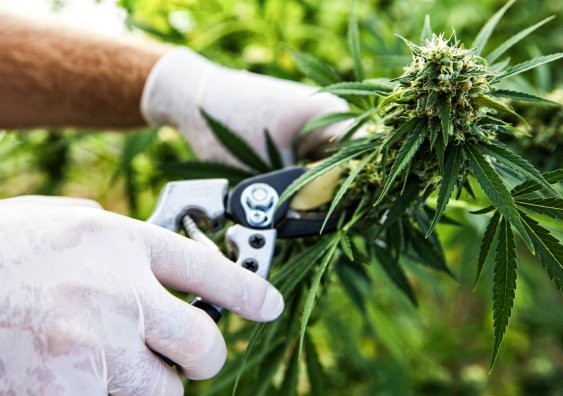
To date, there also aren鈥檛 any resources in Australia that aggregate data or the in-depth experiences of cannabis growers, like the kind available to gardeners of other plants. People can鈥檛 pop down to Bunnings for cannabis gardening advice. Gardening Australia hasn鈥檛 produced a feature on the preferred soil and nutritional needs of cannabis plants. And while there is online information, it mostly doesn鈥檛 address Australian growing conditions.
Photo: Getty Images
As one grower told us,
The climate is really tough in Canberra for the type of plant that cannabis is. It doesn鈥檛 do well over 30 degrees and it doesn鈥檛 do well under like 20-18 [degrees], maybe. And we鈥檙e like the extremes [here] 鈥 we鈥檙e freezing and boiling.
The greater obstacles, however, are legal in nature. For instance, the ACT cannabis law prohibits people from using 鈥渁rtificial鈥 means to grow cannabis, such as hydroponics or artificial sources of light or heat.
This leaves cannabis growers in the difficult position of trying to manage the wintry Canberra climate without the heat lamps and other indoor growing aids they use for their capsicum and tomato plants. There are also no such prohibitions on artificial light or heat for officially sanctioned medicinal cannabis farms.
When an outdoor cannabis plant does flourish, the law also insists on a maximum yield of 150 grams of cannabis. Our interviewees are able to grow quite large (and potent) plants outdoors. So, what are they supposed to do with their excess cannabis? As one grower said,
Are you allowed to like give it to a friend? [鈥 I don鈥檛 know if you can bag it up and put it in the garbage bin [鈥 like do you take it down to the green waste, do I take my bushes down there? I don鈥檛 know.
Another obstacle: buying seeds is not permitted under the ACT law, so the Commonwealth prohibition stands. For many, this means acquiring seeds illegally from overseas markets. We spoke to plenty of people whose plants were fertilised and ended up producing seeds, leaving them in a legal quandary.
One grower pointed out the contradiction:
I think it鈥檚 sort of a half-arse law to be honest [鈥 you鈥檙e allowed to smoke it, you鈥檙e allowed to grow, but you are not really allowed to buy any of the seeds or anything to make it.
Allowing a legally operated cannabis seed bank in the ACT makes practical sense. It would address a need we heard from cannabis growers 鈥 the importance of knowing the type of cannabis plant they are growing and its active ingredients. This includes the amount of THC (the psychoactive ingredient that produces the high), compared to CBD (the ingredient that reduces inflammation, pain, seizures and anxiety).
For those growing for medicinal purposes, this information is critical for matching their crops to their particular needs.
Lastly, we found that growing your own cannabis at home also requires an environment that supports it. For those in rental accommodation or unstable housing, it is often not possible. Passing laws to allow for cannabis community gardens or other open growing areas would address this problem.
With increasing moves towards cannabis legalisation, we are seeing a field of green across Australia, and the world.
ACT growers have a lot to offer other Australian jurisdictions about how policies can better support home cannabis gardeners. It鈥檚 important to learn from their experiences so states and territories can get their policies right.
![]()
, Professor & Specialist in Drug Policy, ; , Scientia Associate Professor, Centre for Social Research in Health, ; , Postdoctoral Fellow in Anthropology, ; , Research Officer, , and , Professor, Environment & Society, School of Humanities and Languages,
This article is republished from under a Creative Commons license. Read the .