91色情片

OPINION: What do Nemo, the聽, a martial arts teacher, and a man who whistled during prayers have in common? They have all been convicted by a court for blasphemy in Indonesia.

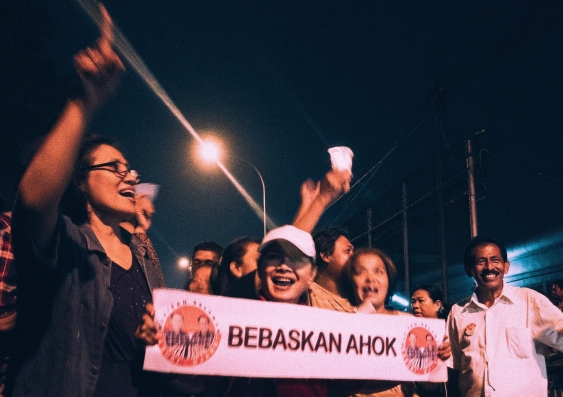
Yesterday the global community was shocked by the聽聽in Jakarta, the teeming capital city of the world鈥檚 largest Muslim-majority democracy. The outgoing Governor of Jakarta who referred to himself as 鈥楴emo鈥�, Basuki Tjahaja Purnama (Ahok), was found guilty of blaspheming Islam.

So not only did Ahok lose an election that he was originally expected to win, but he also lost the biggest blasphemy court case in the history of Indonesia.

Many have commented on the fact that Ahok is a Chinese-Christian. Yet Ahok is not the first Chinese-Indonesian, nor the first Christian, to be found guilty of blaspheming Islam, as my book on聽聽in Indonesia explains.

In 1997, a Chinese-Indonesian man and his wife were聽聽of blaspheming Islam after they confronted youths in a mosque about the level of noise from the call for prayer. In 2007, a group of聽41 Christians聽were found guilty of blaspheming Islam after stepping on the Qur鈥檃n, among other offensive actions.

Ahok, though, takes the crown for the most high profile blasphemy case, and sets a record as the first Governor of Jakarta to be convicted of blasphemy.

The trial had become something of a circus, with the proceedings聽聽on national television.

The reason the legal outcome was so surprising to some is that the judges ignored the recommendations of the prosecution. When the court case recommenced the day after the elections, the prosecution had requested that the court convict Ahok for the lesser offence of expressing hostility towards the Muslim community under section 156 of the Penal Code and impose a suspended sentence of two years. Instead, the court found Ahok guilty of the more serious offence of blasphemy under section 156a, and sentenced him to two years in jail.

There have been volumes of commentary on the聽political聽dimensions of the recent Jakarta elections for governor. Yet the legal dimensions and the role that the courts have had to play in Ahok鈥檚 downfall has surprisingly been overlooked and largely ignored.

The criminal accusations of blasphemy against Ahok were part of a broader legal battle in Indonesia between the courts and the executive, and between religious authorities and the state.

First, the battle between the courts and the executive is evident in the courts鈥� blatant disregard for the prosecution鈥檚 submission. It is unusual that more has not been said about the prosecution鈥檚 recommendations for conviction under section 156, rather than 156a, and the two year suspended sentence. This request appeared like a rather convenient concession to Ahok, the day after his resounding defeat at the polls.

The courts, it seems, were not having any of this. That anyone thought that the courts might simply accept the prosecution鈥檚 suggestion demonstrates the lack of understanding of the nature of judicial 鈥榠ndependence鈥�, or what I call judicial defiance, in Indonesia.

Indonesia鈥檚 judges are fiercely protective of their independence to a point that it now borders on a gross lack of accountability. On one hand, many commentators have lauded Indonesia鈥檚 structural changes in the early years of the transition that introduced 鈥榦ne roof鈥� reforms. These reforms transferred all judicial powers and functions to the Supreme Court, away from the Ministry of Law.

This was supposed to be a move to enhance judicial independence. However, given the numerous聽, a body designed to balance judicial independence with judicial accountability, judicial 鈥榠ndependence鈥� has come out trumps. Judges have used the idea of judicial independence to defy any real or perceived efforts by the executive and legislature to keep them accountable and limit their discretion.

This judicial defiance manifests itself in a range of ways, such as the refusal of some judges to impose a legislative mandatory minimum sentence. These judges reason that no one should be able to tell them what to do. Judges know best with sentencing, they claim, and neither parliament nor the prosecution can limit their freedom in this regard. The judiciary in Ahok鈥檚 case clearly seemed to have little regard for the prosecution.

The second legal battle that has taken place is one between religious authorities and the courts. The courts have had to tread a delicate line when it comes to religious-related crimes. In blasphemy cases, the courts have adopted what I call an attitude of 鈥榬eligious deference鈥�. That is, the courts will generally acquiesce to the demands of a religious group, preferring not to have to decide on the thorny religious issues themselves.

In Ahok鈥檚 case, even firebrand Islamist聽Rizieq Shihab was called as an 鈥榚xpert witness鈥櫬燿uring the trial. That the court was willing to entertain such an inflammatory character should have been a cause for alarm. Further, its verdict appears to affirm the controversial claims by a fringe group of Muslim religious authorities that Ahok鈥檚 words had blasphemed Islam.

Ahok has already indicated that he will appeal. While many political analysts assumed that the show was over after Election Day, it seems that in fact the show has only just begun.

It鈥檚 not all gloom ahead for Ahok. There have been blasphemy cases where the accused has been successful on appeal. In fact, in the blasphemy case of the staff of a controversial Islamic drug and cancer rehabilitation centre,聽聽on appeal. Ahok may not be so lucky.

There is one difference though between the Archangel Gabriel, a martial arts teacher, a man who whistled during prayers, and Ahok. The difference is that Ahok is probably the most well-resourced person (in terms of money, legal connections and political influence) to be convicted for blasphemy. So rather than just feeling sorry for Ahok, spare a thought for all the other Nemos who have discovered the high legal price of swimming against the tide in Indonesia.

Dr Melissa Crouch聽is a聽Senior聽Lecturer in Law at 91色情片.聽

This article was first published at APPS Policy Forum. Read the